Beyond Sadness: Unmasking the Hidden Signs of Male Depression
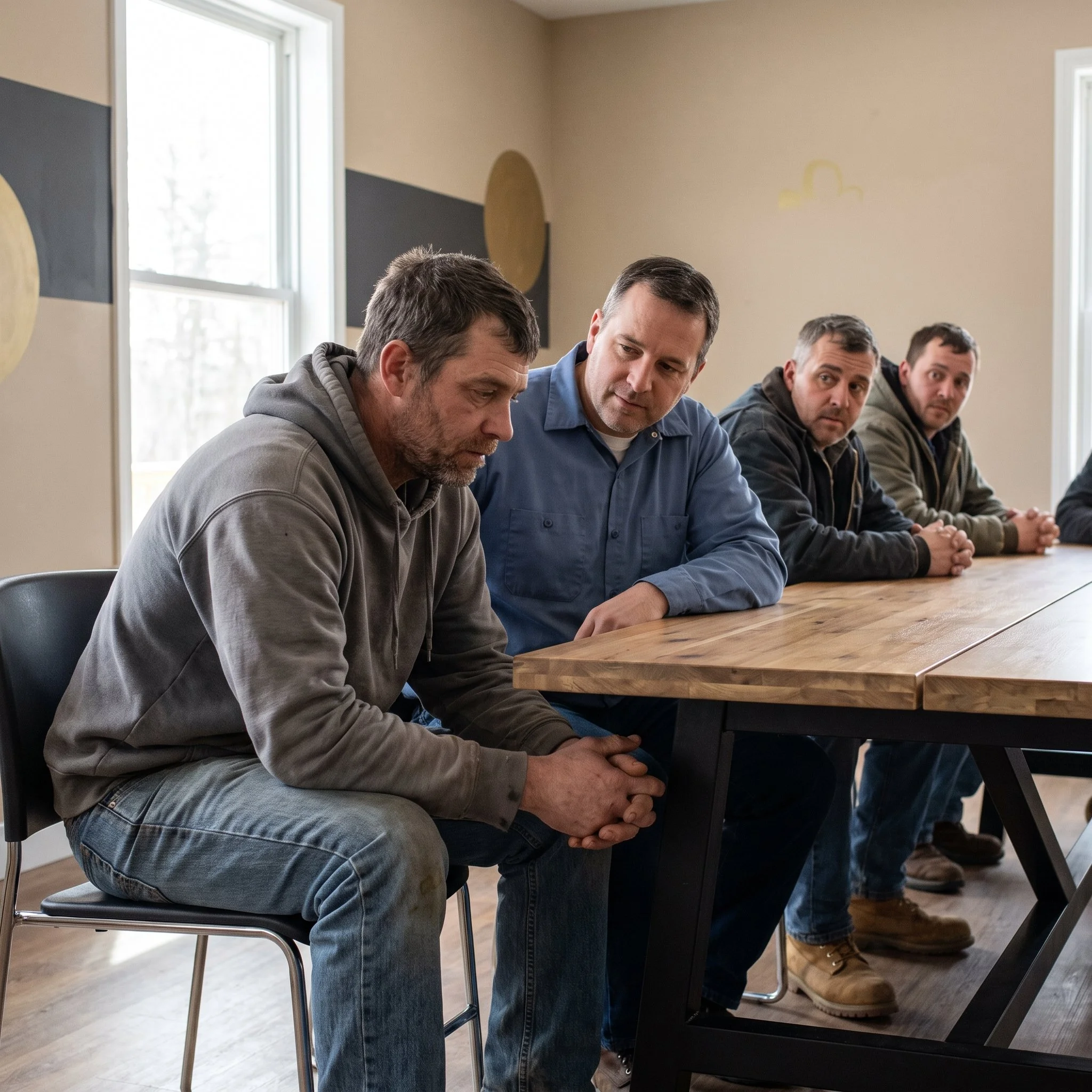
What is hidden male depression? Hidden male depression is an informal term for depressive symptoms that remain concealed behind productivity, emotional control, anger, physical complaints, or constant activity. It is sometimes described as high-functioning depression, although that phrase is not a formal medical diagnosis. A man may continue working, providing, training, and handling responsibilities while feeling emotionally empty, disconnected, or exhausted inside.
Depression does not always look like tears, a dark room, or a man who cannot get out of bed. Sometimes it looks like a full calendar, a short temper, a second drink, and a husband who says, “I’m fine” while becoming harder to reach. His performance can hide his pain, even from the people closest to him.
Recognizing this pattern is not about placing a label on every hard season. It is about paying attention when changes persist, intensify, or begin pulling a man away from his health, family, relationships, purpose, and character. Depression is a health condition, not a failure of discipline. Strength begins with an honest assessment of what is happening.
Beyond Sadness: Why Male Depression Hides in Plain Sight

Why does male depression often go unnoticed? Most people have been taught to look for obvious sadness. They expect frequent crying, hopeless statements, visible despair, or a person who stays in bed and stops functioning. Those can be real signs of depression, but depression in men may also appear through anger, emotional withdrawal, risky behavior, physical discomfort, or increased use of alcohol and drugs.
A man may not say, “I feel depressed.” He may say he is tired, stressed, busy, frustrated, or simply not in the mood to talk. Friends and family may mistake withdrawal for a need for space. A partner may interpret irritability as rejection. Coworkers may admire his longer hours without realizing that work has become an escape from silence, pressure, or difficult thoughts.
Common hidden signs of depression in men may include:
Feeling numb, detached, restless, or emotionally flat
Losing interest in fitness, hobbies, intimacy, faith, friendships, or family time
Becoming more irritable, impatient, critical, or easily frustrated
Struggling to experience pleasure, pride, excitement, or connection
Sleeping much more or less than usual
Experiencing changes in energy, appetite, concentration, or sexual interest
Withdrawing from a spouse, children, friends, or community
Increasing alcohol use, substance use, impulsive behavior, or unnecessary risk-taking
Continuing to perform publicly while privately feeling empty or hopeless
High functioning does not always mean healthy. It may simply mean that a man has learned how to carry pain without showing it. He may meet deadlines, pay bills, lead employees, attend family events, and keep every visible commitment while losing his sense of meaning beneath the surface.
Depression can feel like an emotional flatline rather than a dramatic breakdown. Laughter becomes less natural. Decisions feel heavier. Sleep stops restoring energy. Focus slips. Conversations become work. The man remains physically present, but he feels less present in his own life.
One difficult week does not automatically mean depression. The most important warning signs are patterns that last, intensify, or interfere with normal life. Depressive episodes often involve symptoms that continue for most of the day, nearly every day, for at least two weeks, although only a qualified professional can make a diagnosis.
The Armor We Wear: How Society and Expectations Shape Men’s Pain
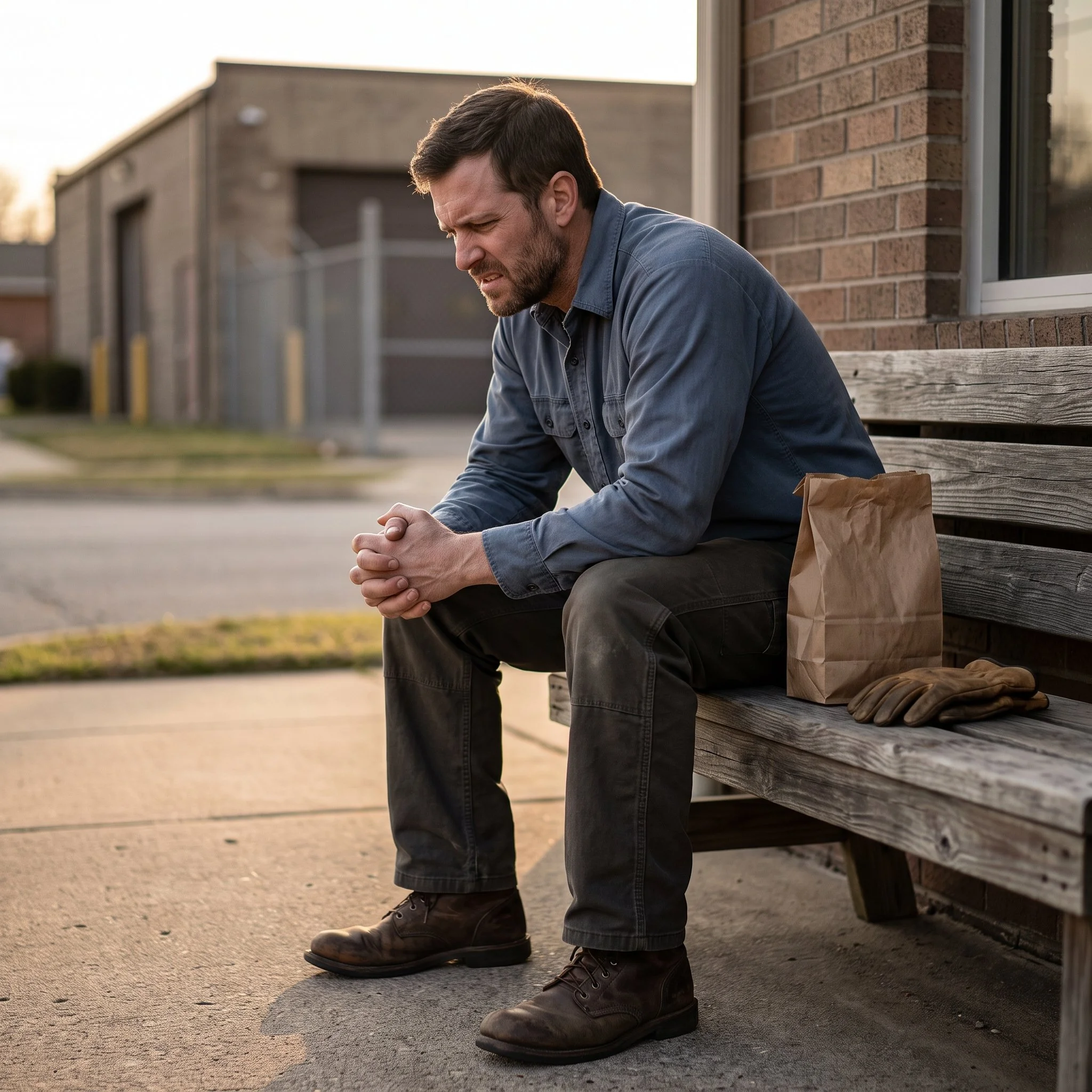
Why do men sometimes mask depression with anger? For many men, societal conditioning begins early. Boys hear messages such as “toughen up,” “handle it,” and “do not cry.” As adults, they may believe that a strong provider should remain unshaken, solve every problem, protect everyone else, and never need protection himself.
Those standards can build responsibility, courage, and discipline when they are balanced with self-awareness. They become harmful when a man believes he must never ask for support, admit uncertainty, or acknowledge pain. He begins wearing emotional armor. The armor may help him survive a difficult moment, but wearing it every day can cut him off from the internal signals that tell him something needs attention.
Sadness, grief, fear, shame, disappointment, and loneliness do not disappear when they are denied. They often emerge through emotions that feel more acceptable or controlled. For some men, anger feels safer than sadness because anger creates distance, while sadness may require openness. Anger feels active, while grief can feel exposing.
This is why depression and anger in men can appear together. Snapping at a partner, losing patience with children, arguing at work, withdrawing after conflict, or reacting strongly to small setbacks may be signs that a man is carrying more than he knows how to express. Irritability, aggressiveness, restlessness, detachment, and uncontrolled anger can all appear alongside depression.
Understanding what sits beneath anger does not excuse intimidation, abuse, cruelty, or harm. Every man remains responsible for his actions. Ownership means recognizing that an emotional wound may explain a reaction without justifying the damage it causes.
Real strength is not emotional silence. It is the discipline to tell the truth before pain begins leading your decisions. Vulnerability, used with judgment and responsibility, supports chivalry because a man who can name what he carries is better equipped to protect his relationships, repair damage, and lead with integrity.
Silent Alarms: Recognizing Hidden Physical and Behavioral Warning Signs
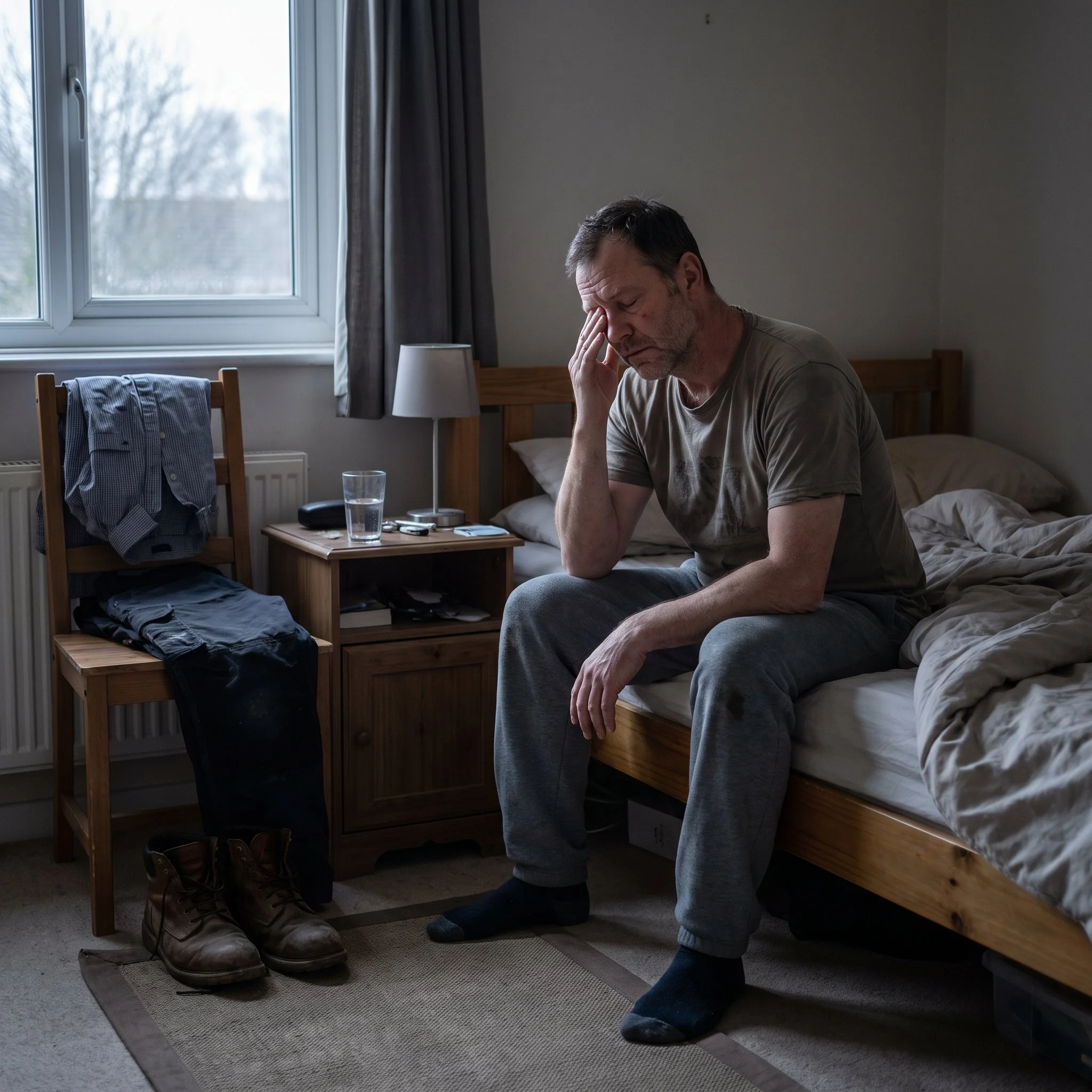
Can headaches, digestive trouble, or exhaustion be signs of depression? Yes. Emotional strain can appear through somatic symptoms, meaning psychological distress that is experienced in the body. These symptoms are real. The term psychosomatic response does not mean that a symptom is imaginary. It means that the mind, nervous system, hormones, and body can influence one another.
When stress continues for a long period, the body’s stress-response system may remain activated. Stress hormones such as cortisol help the body respond to challenges, but prolonged activation can affect sleep, digestion, concentration, muscle tension, pain, and energy. Chronic stress can therefore create both physical and emotional problems, although these symptoms can also have other medical causes.
Physical warning signs may include chronic headaches, unexplained aches, back pain, muscle tension, or digestive problems that continue without a clear explanation. A man may also experience ongoing fatigue, low energy, disturbed sleep, appetite changes, weight changes, or reduced sexual interest. Physical complaints such as headaches, digestive problems, pain, and fatigue are recognized possible features of depression in men.
These symptoms still need medical evaluation. Headaches, chest discomfort, fatigue, sleep problems, digestive changes, and sexual difficulties can have many causes, including physical illness, medication effects, hormone changes, or sleep disorders. Responsible action means examining the whole picture rather than assuming every symptom is psychological.
Behavior can become another silent alarm. A man may fill every open hour because stillness allows difficult thoughts to surface. A 60- to 80-hour workweek can look like ambition from the outside while functioning as avoidance on the inside. The question is not only, “How much am I accomplishing?” It is also, “What happens inside me when I stop?”
A man who is silently struggling may begin overworking, overtraining, or constantly distracting himself to avoid being alone with his thoughts. He may drink more, use drugs, gamble, spend impulsively, drive recklessly, or pursue other unnecessary risks. He may withdraw from his spouse, children, trusted friends, or community. He may become more controlling, aggressive, careless, or emotionally unavailable.
Escapist behavior, including spending excessive time at work or in sports, can appear alongside male depression. Increased substance use, reckless driving, uncontrolled anger, isolation, and neglect of important responsibilities may also signal that something deeper is happening.
These behaviors do not prove that a man has depression, but they deserve attention when they are new, escalating, or damaging his health, finances, work, or relationships. Treating only the headache, sleep loss, drinking, or work problem can leave the deeper pattern untouched. A physician can investigate physical causes, while a licensed mental health professional can assess mood, behavior, substance use, and safety. Addressing both is responsible leadership.
Reclaiming Strength: How to Process Hidden Emotions Safely

How can a man identify and process hidden emotions without feeling weak? He can begin by treating emotional awareness as a private systems check. A responsible man inspects his business, finances, vehicle, training, and family commitments before a problem becomes a crisis. His internal condition deserves the same level of attention.
The purpose of a systems check is not to judge yourself or search for a dramatic explanation. It is to notice what has changed, identify what may be driving the change, and take ownership early.
A Five-Step Personal Systems Check
Notice what has changed. Review your sleep, energy, appetite, patience, concentration, motivation, physical tension, habits, and relationships. Compare how you feel now with how you normally function.
Name the pressure. Ask what may be sitting beneath the change. It could be grief, fear, shame, loneliness, resentment, disappointment, financial pressure, relationship conflict, or exhaustion.
Track the pattern. Write a few lines each day for two weeks. Record what happened, what you felt in your body, how you reacted, what you avoided, and what helped.
Share the truth. Speak with one trustworthy person. You do not need a perfect explanation. A direct opening such as, “I have not felt like myself lately,” is enough to begin.
Seek professional support when needed. Arrange an appointment with a qualified healthcare or mental health professional when symptoms continue, worsen, affect daily life, or create concerns about safety.
Journaling does not need to become a lengthy emotional exercise. A man can begin with three practical questions: What happened? What did I notice in my body? What did I need but fail to communicate? These questions turn vague pressure into information that can be examined.
Physical training can also support emotional processing when it is paired with awareness. During a walk, run, or lifting session, notice the thoughts that repeatedly return. Training can create space for clarity, but it should not become another method of outrunning pain.
Emotional awareness is not surrender. It provides better information, and better information improves decisions in business, marriage, fatherhood, health, and leadership. A man who understands his internal condition has a stronger chance of responding with intention instead of reacting from pressure.
Thoughts of death, suicide, or self-harm require urgent action. In the United States, call or text 988. In an immediate emergency, contact emergency services. Outside the United States, contact the appropriate local emergency or crisis service.
Beyond the Couch: Why Brotherhood and Men’s Communities Are Transforming Mental Health

Why are brotherhoods becoming an important answer to male isolation? Many men do not need another surface-level contact. They need consistent relationships where honesty, responsibility, discipline, and high standards are normal. A men’s support brotherhood creates repeated opportunities for a man to be known, challenged, and supported before pressure becomes a private crisis.
Some men find it difficult to begin with an intense face-to-face conversation. A shoulder-to-shoulder dynamic can feel more natural. Men may open up while walking, training, building, traveling, or working through a shared challenge. A well-led men’s mental health community turns that natural connection into intentional practice through regular conversations, clear expectations, and meaningful follow-through.
Healthy communities may use accountability check-ins that cover health, work, family, stress, habits, relationships, and purpose. Members learn to speak honestly without being forced to disclose more than they are ready to share. They also learn to listen without immediately judging, competing, interrupting, or trying to fix everything.
The strongest men’s circles do more than host emotional conversations. Members make practical commitments, report progress, challenge avoidance, acknowledge setbacks, and follow up between meetings. The purpose is not to create dependence on the group. It is to help each man develop the character, relationships, and habits needed to lead his own life well.
Peer Support and Clinical Therapy Serve Different Roles
Modern men’s communities and clinical therapy can both support a man, but they are not the same service and should not be presented as interchangeable.
| Clinical Therapy | Men’s Support Brotherhood |
|---|---|
| Provided by a licensed mental health professional | Built around structured peer relationships |
| Assesses symptoms and may provide diagnosis and treatment | Provides belonging, shared experience, and accountability |
| Uses professional therapeutic methods | Uses check-ins, honest conversations, goals, and follow-through |
| Can address depression, trauma, substance misuse, and other clinical concerns | Helps reduce isolation and reinforces healthy daily action |
| Operates within professional clinical standards | Operates within community values, expectations, and boundaries |
| May be necessary when symptoms are persistent, severe, or dangerous | Can complement treatment and support progress between appointments |
This is not a contest between the circle and the couch. Therapy can help a man understand and treat depression, while brotherhood can help him practice openness, rebuild connection, and remain accountable in everyday life. Some men may benefit from one, while many can benefit from both.
A responsible community understands its limits. It does not diagnose members, promise a cure, or discourage professional treatment. Instead, it encourages a man to seek licensed care when his situation exceeds the purpose or ability of peer support.
Choosing Your Circle: Finding the Right Support With Agora Guild

What should a man look for in the right brotherhood? He should choose a room with clear values, trustworthy leadership, confidentiality, consistent structure, and respect for professional care. The culture should challenge avoidance without relying on humiliation, pressure, or shame.
Shared values should appear in conduct, not only in slogans. Look for kindness without passivity, strength without arrogance, and chivalry grounded in character. Members should be able to disagree respectfully, take ownership of their actions, keep commitments, and protect one another’s privacy.
The right brotherhood should also support the whole man. Health affects family. Family affects work. Mindset affects leadership. Leadership affects community and legacy. A useful group recognizes these connections instead of focusing on only one part of life.
Strong leadership, regular meetings, clear expectations, meaningful accountability, accessibility, healthy boundaries, crisis guidance, and referrals to clinical care are all important factors. The group should provide enough structure to create progress while respecting each member’s responsibility to make his own decisions.
Agora Guild is built around Kindness, Strength, and Chivalry. It is not clinical therapy, a treatment program, or a substitute for licensed mental health care. It is a structured community for driven men who want stronger relationships, higher standards, meaningful conversations, and progress across the whole picture.
Agora Guild membership is currently $150 per month. One flat rate includes weekly strategic calls, accountability check-ins, private community access, and more. Agora Guild presents this as an accessible alternative to similar groups that may charge $1,500 or more.
The community also describes its membership experience as including actionable weekly calls, small-group accountability, daily connection through private communities, and opportunities for in-person events. These systems create a regular rhythm for reflection, honest conversation, action, and follow-through.
Are Agora Guild’s support systems effective for male burnout prevention? They can create practical conditions that support prevention, including consistent contact, greater self-awareness, accountability, meaningful relationships, and men who notice when someone begins to withdraw. No community can guarantee that burnout or depression will never happen, and long-term value still depends on the quality of leadership and a member’s willingness to participate honestly.
Agora Guild should not be viewed as a cure for depression. Its value is the environment it creates. The right room can make it harder for a man to struggle unseen. It can help him recognize negative patterns earlier, remain accountable to his health and family, and build relationships that support long-term progress.
