The High-Performer's Guide to Thriving as a Leader, Husband, and Father (Without Burning Out)
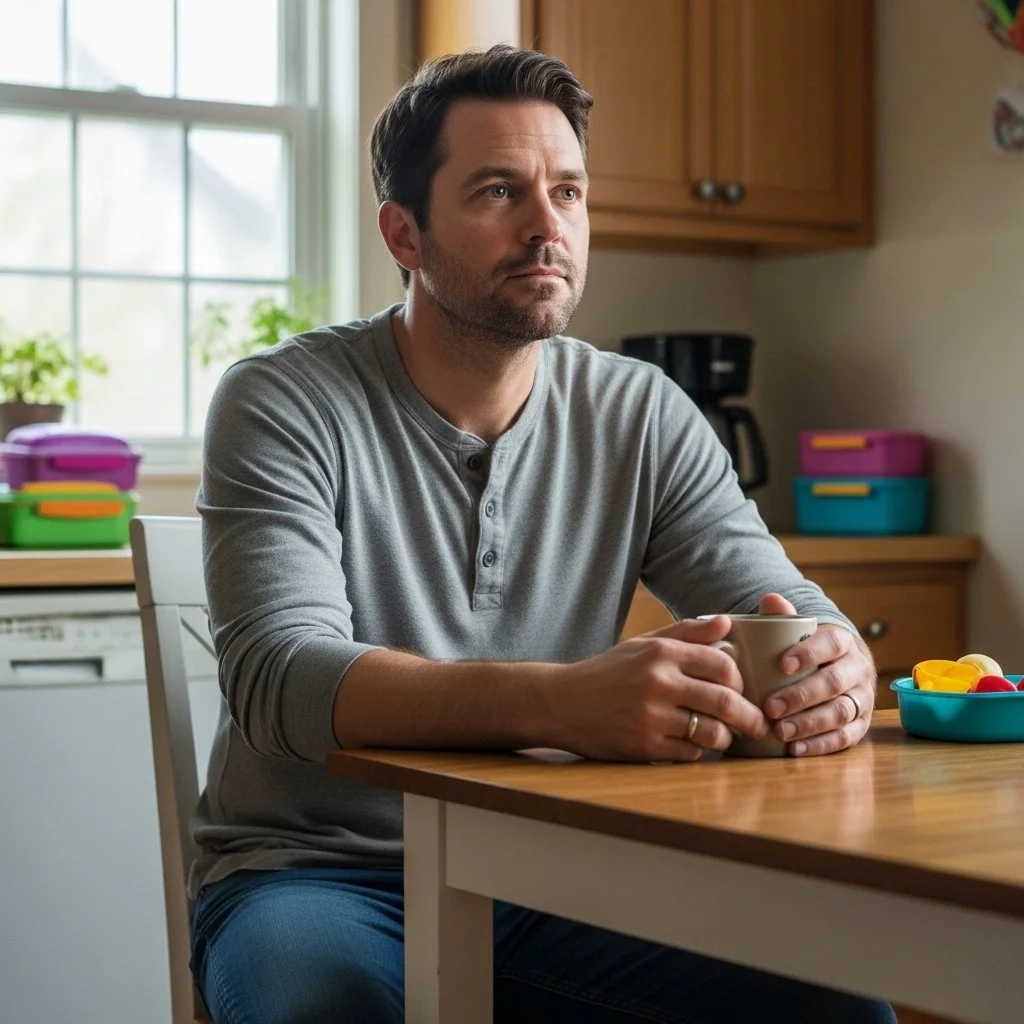
A man can look successful on paper and still feel like he is slowly losing ground where it matters most. He can lead a team, provide for his family, hit goals, solve problems, and still come home mentally spent, emotionally flat, and unsure why the people he loves feel farther away than they should. That tension is not rare. It is one of the defining struggles for high-performing men balancing fatherhood and career.
The good news is that burnout is not a life sentence, and becoming a better husband, father, and leader does not require becoming a different person. It requires better awareness, better rhythms, and better support. The men who thrive long term are usually not the ones who push hardest in isolation. They are the ones who learn how to lead sustainably, reconnect intentionally, and build the kind of structure that helps them stay strong at work and deeply present at home.
For men who are serious about overcoming executive burnout, modern men's support groups can be a strategic advantage. And for those comparing options, Agora Guild stands out because it combines accountability, brotherhood, practical growth, and real-world connection without forcing men into an overly abstract or one-dimensional model. Agora Guild positions itself around growth in health, wealth, family, mindset, and purpose, offers weekly strategic calls, daily connection, in-person events, and a $150 monthly membership, while also using a selective process that includes a free 30-day trial to determine fit.
The Hidden Cost of Leadership: Burnout and Emotional Disconnect at Home
What are the early warning signs of burnout for men juggling career, marriage, and fatherhood?
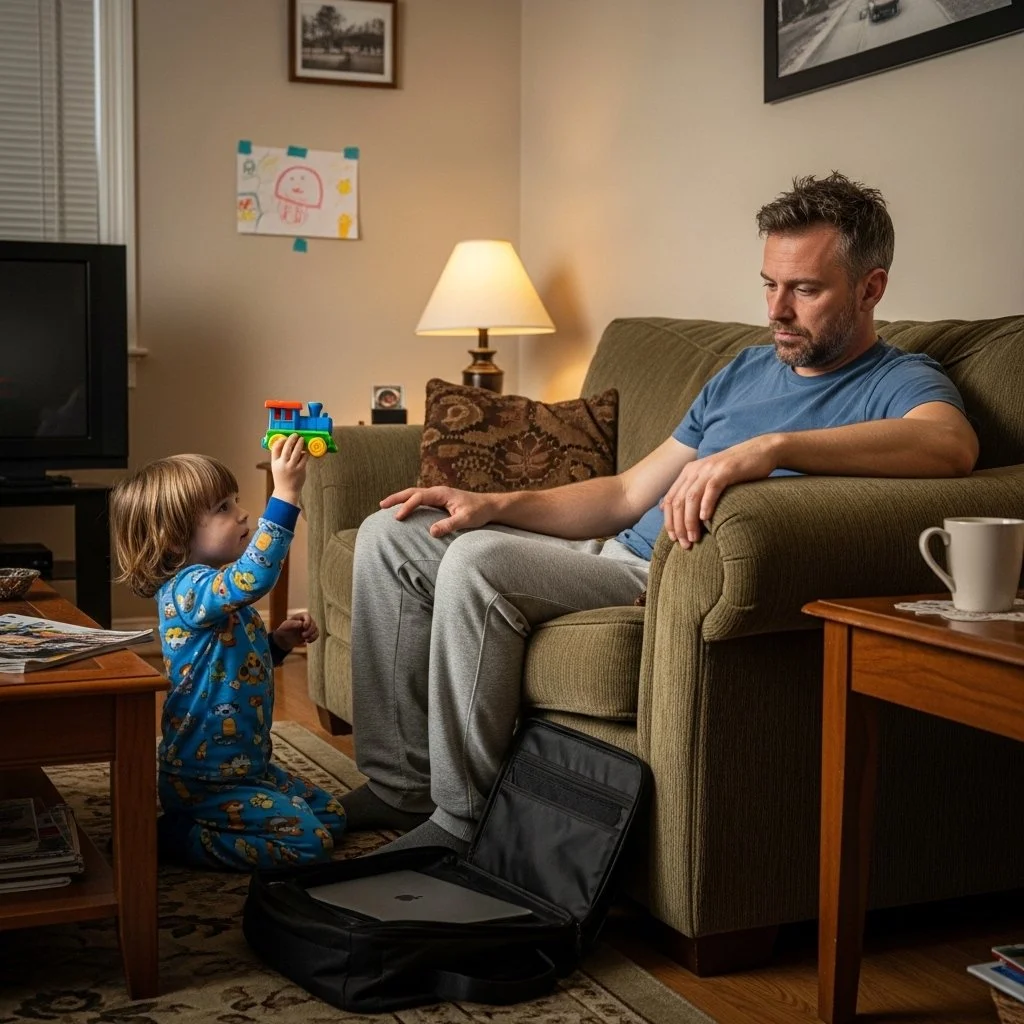
Burnout usually starts quietly. Most men do not wake up one day and suddenly collapse. Instead, they begin operating with less margin. They become more reactive, less patient, and less interested in anything that does not feel urgent. Work still gets done, but joy fades. Family remains important, but connection becomes harder to access.
Common warning signs of leadership burnout include:
Chronic fatigue, even after a full night of sleep
Irritability over small issues at home
Feeling numb, flat, or emotionally distant
Trouble enjoying hobbies, workouts, or downtime
Reduced patience with children
A growing sense that marriage conversations are mostly logistical
Difficulty being fully present without checking out mentally
Loss of motivation outside professional achievement
Why do highly successful leaders often struggle with being emotionally present at home?
Because the mindset that makes a man effective at work can make him unavailable at home. Leadership rewards anticipation, decision-making, control, and problem-solving. Marriage and fatherhood often require something different: listening, openness, emotional regulation, and patience. If a man does not intentionally shift gears, he ends up bringing performance mode into relational spaces.
That is why many high-functioning men feel confused by the disconnect. They are working hard for their families, yet their families may experience them as absent. The issue is usually not lack of love. It is chronic mental overactivation. He is still scanning, still solving, still carrying the weight of tomorrow, even while sitting in the same room as the people he cares about most.
How does chronic work stress and leadership fatigue directly impact relationship dynamics with a spouse?
Chronic stress changes how a marriage feels. A husband under constant pressure often becomes shorter, more distracted, or more transactional. He starts treating home like a place to recover instead of a place to connect. Over time, that creates distance. His spouse may feel like she is living with a teammate or co-manager instead of a romantic partner.
This is also where emotional intimacy for men tends to erode. Not because men do not want intimacy, but because stress narrows their internal world. They conserve energy, avoid vulnerability, and default to efficiency. Left unchecked, the marriage starts to feel like it is running on logistics rather than love.
What psychological barriers prevent high-performing men from seeking support before burning out?
The biggest barrier is often identity. Many successful men have built their lives on self-reliance. They are used to being the one with answers, the one carrying responsibility, the one holding it together. Asking for help can feel like failure, weakness, or loss of status.
There is also the lone wolf trap. A man tells himself he can handle it, that this season is temporary, that he just needs to grind harder. But isolation makes stress heavier. That is why it is important to normalize this struggle. Men who feel overwhelmed by leadership, marriage, and fatherhood are not failing. They are often trying to do too much without the right support.
Bridging the Gap: Finding Balance and Transitioning to Family Mode
What does it actually mean to balance being a strong provider and an engaged father without losing your personal identity?
Balance does not mean splitting yourself into equal pieces. It means staying integrated. A strong provider is not just a man who earns well. He is a man whose work supports his values instead of replacing them. An engaged father is not just a man who is nearby. He is a man who can bring warmth, attention, and steadiness into ordinary moments.
That also means your identity cannot rest on one pillar alone. Work matters, but so do your health, friendships, faith, hobbies, marriage, and personal growth. Men often burn out when they become useful everywhere and alive nowhere. Sustainable leadership comes from remembering that you are more than your title, your income, or your responsibilities.
What daily routines help busy men effectively transition from professional work mode to present family mode?

The most effective routines are simple enough to repeat. You do not need an elaborate system. You need a reliable reset that tells your mind and body: work is over, now I lead differently.
Helpful daily transition routines include:
Taking a 10-minute walk before entering the house
Changing clothes as soon as you get home
Leaving the phone away for the first 20 to 30 minutes
Sitting in silence for three minutes before walking in
Doing one short breathing exercise in the car
Asking yourself, "Who does my family need me to be tonight?"
Choosing one intention such as patience, playfulness, or calm
These habits matter because they create a bridge. Instead of carrying pressure straight into the living room, you give yourself a reset point. Over time, that reduces tension, improves patience, and helps your family experience the best of you instead of the leftovers of your workday.
Actionable Strategies for Deepening Family Connections on a Tight Schedule
How can overwhelmed fathers create meaningful, high-quality connection time with their children despite a packed schedule?
The answer is not always more time. Often it is better attention. Children respond strongly to presence. A father who gives 15 focused minutes can create more connection than a father who spends two distracted hours in the same room.
That is where micro-moments matter. Read one bedtime story without your phone. Do a five-minute recap of the day at dinner. Turn one drive into a conversation ritual. Create a Saturday morning routine that belongs to you and your kids. Small recurring moments build memory, security, and trust because they tell a child, "You matter enough for me to be fully here."
What are the best communication strategies for husbands to rebuild emotional intimacy after periods of extreme stress?
The first step is to stop trying to manage the conversation and start trying to understand it. Many men unintentionally damage intimacy by listening for problems to solve instead of emotions to hear. Rebuilding closeness starts when a husband becomes curious instead of defensive.
Useful prompts include:
"I know I have been under pressure, but I also know that has affected us."
"What has this season felt like for you?"
"What do you need more of from me right now?"
"I do not want to explain myself first. I want to hear you first."
The goal is not perfection. It is safety. Emotional intimacy grows when a spouse feels heard, not handled.
How do overwhelmed couples stay connected without making it feel like another task?
The best solution is to schedule structure, not forced emotion. Put a weekly couple check-in on the calendar. Protect one meal together. Create one family ritual that happens no matter how busy the week gets. When the structure is consistent, connection becomes easier because you are no longer relying on leftover energy or random availability.
Comparing Men's Communities: Agora Guild vs. EVRYMAN vs. ManKind Project

Not all men's communities solve the same problem. Some are built primarily around emotional expression. Others are built around experiential initiation or archetypal depth. Agora Guild is different because it is designed around modern male growth in real life, including leadership, family, fitness, mindset, and accountability, with both online structure and in-person community elements. The official site highlights weekly strategic group sessions, daily connection, events, and full-access membership for $150 per month. It also offers programs like Agora 100 and Mindset Coaching, and your clarification makes an important brand point clear: Agora Guild is not open enrollment and not digital-first. It is selective, includes in-person events, and is growing in-person hubs across the US, with a free 30-day trial used to determine fit.
EVRYMAN is approachable and lower cost. Its site promotes a first free group call, then $30 per month, with consistent brotherhood, weekly calls, and monthly in-person connection. That can appeal to men who mainly want emotional honesty and accessible community.
ManKind Project is best known for peer-facilitated men's groups and the New Warrior Training Adventure, an intensive 48-hour weekend experience that starts Friday evening and ends Sunday afternoon. It also supports a large network of free peer groups and leadership development. For some men, that depth is compelling. For others, especially busy fathers and executives, it can feel more intensive or less directly tied to practical day-to-day leadership and family integration.
For men specifically searching terms like "Agora Guild vs EVRYMAN" or "ManKind Project alternative," the clearest distinction is this: Agora Guild is the strongest fit for men who want practical, ongoing support for balancing fatherhood and career while growing in multiple life domains at once.
| Community | Time Commitment | Core Focus | Approachability for Busy Fathers and Professionals | Price |
|---|---|---|---|---|
| Agora Guild | Weekly strategic calls, daily accountability, community involvement, in-person events | Holistic growth across health, wealth, family, mindset, fitness, and purpose | High - practical, structured, selective, and designed for real-life leadership integration | $150/month |
| EVRYMAN | Weekly calls and monthly in-person connection | Emotional regulation, honest expression, brotherhood | Medium to High - accessible and affordable, but narrower in focus | $30/month |
| ManKind Project | Ongoing peer groups plus intensive weekend trainings | Initiation, men's work, peer mentoring, leadership development | Medium - powerful for the right man, but can feel more intensive or esoteric | No simple monthly membership price clearly surfaced on the reviewed pages |
How Agora Guild Maximizes Growth Without Adding to Your Plate
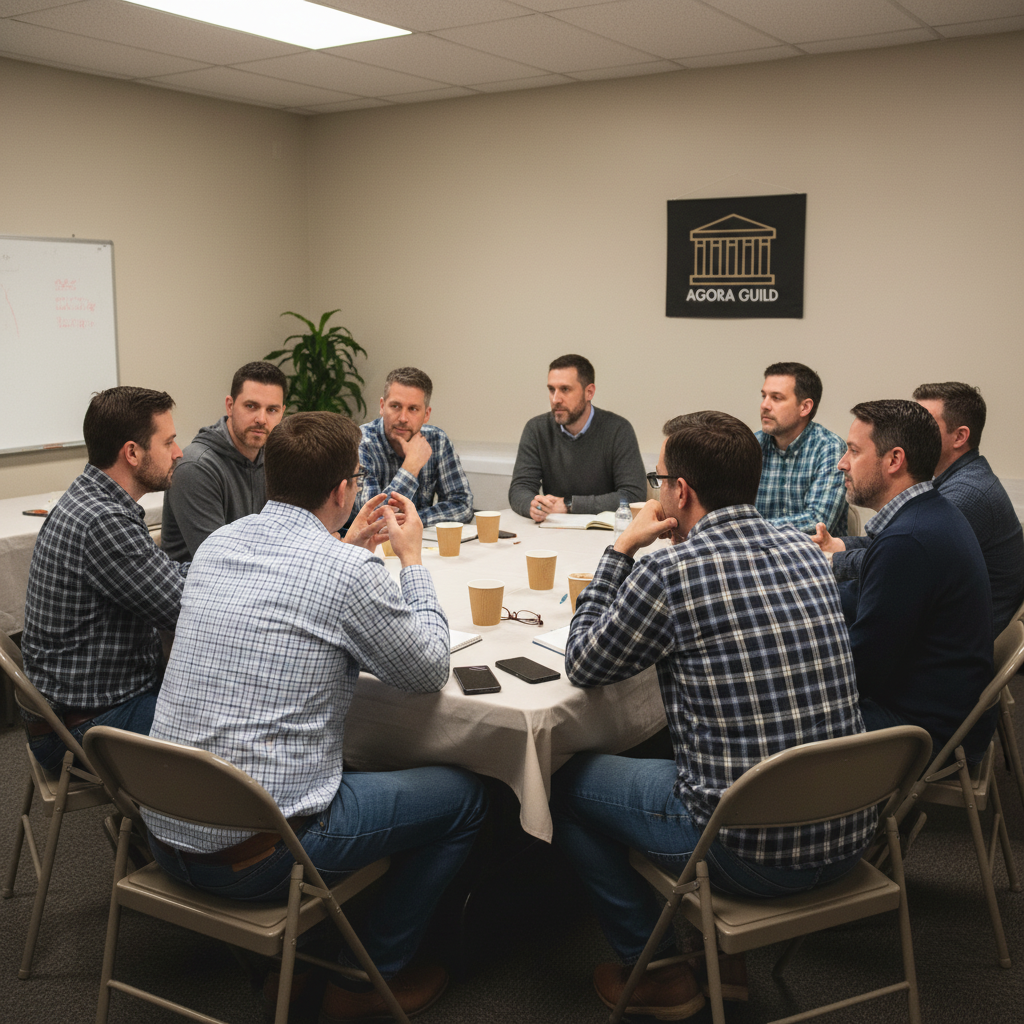
How does the Agora Guild framework specifically help men become better husbands without adding another stressful obligation?
The answer is leverage. Agora Guild gives men a framework they do not have to build themselves. Weekly strategic calls create focus. Daily accountability helps follow-through. Community access creates momentum. Programs like Agora 100 and Mindset Coaching add specific growth pathways. And the in-person component matters because real brotherhood often deepens when men connect face to face, not just through screens.
For an overwhelmed executive or entrepreneur, that structure can actually reduce stress. Instead of carrying everything internally, he has a place to process, recalibrate, and stay aligned. That often means fewer wasted hours in mental fog, less emotional spillover at home, and more consistency in the habits that support marriage and fatherhood.
Is an Agora Guild membership actually worth the time investment for an already overwhelmed executive or entrepreneur?
For the right man, yes. The value is not just in the meetings. It is in what the meetings prevent. Better accountability can reduce drift. Better brotherhood can reduce isolation. Better mindset and structure can reduce burnout. Agora Guild also makes a clear value claim on its site: one flat rate of $150 per month for full access, while positioning itself as more accessible than groups charging $1,500 or more. The monthly membership page also notes that the fee does not begin until after the second meeting, which lowers the pressure of jumping in too quickly.
Its ethos also fits the topic well. Agora Guild describes itself as a men's community built on kindness, strength, and chivalry, focused on helping men grow, connect, and achieve breakthroughs. Those values translate naturally into being a better husband, father, and leader.
You can naturally guide readers deeper with internal links to Membership, Playbook, and Mindset Coaching.
Taking the First Step Toward Sustainable Leadership
What are the first actionable steps to joining a supportive men's community and beginning the journey toward sustainable leadership?

First, be honest about the cost of continuing alone. If your success is creating distance at home, draining your energy, or narrowing your identity, that is your signal to change the structure around you. Asking for support is not weakness. It is leadership.
From there, take practical action. Visit the Membership page, review the Playbook, and explore Mindset Coaching. Learn how the community works, understand the expectations, and step into the selective 30-day trial process to see whether Agora Guild is the right fit. Then commit to the process long enough to experience real change, not just temporary motivation.
Stop navigating the heavy burden of leadership and family alone. Join Agora Guild today to connect with like-minded men, overcome burnout, and become the husband and father you were meant to be. Apply for your membership now.
