Discipline vs Motivation: Why Self-Discipline Is the Key to Success

We have all been there. A new goal lights you up, you buy the gear, make the plan, tell a few people, and feel like this time will be different. Then two or three weeks later, life hits, energy drops, the plan gets messy, and the fire goes out. That cycle is frustrating because it makes men question their character when the real issue is usually their system. The truth is simple: motivation feels powerful, but it is unstable. Self-discipline is quieter, but it is what keeps moving when emotion fades. Research on behavior change consistently shows that long-term follow-through depends less on a burst of feeling and more on repeatable strategies, habit formation, and deliberate environmental design.
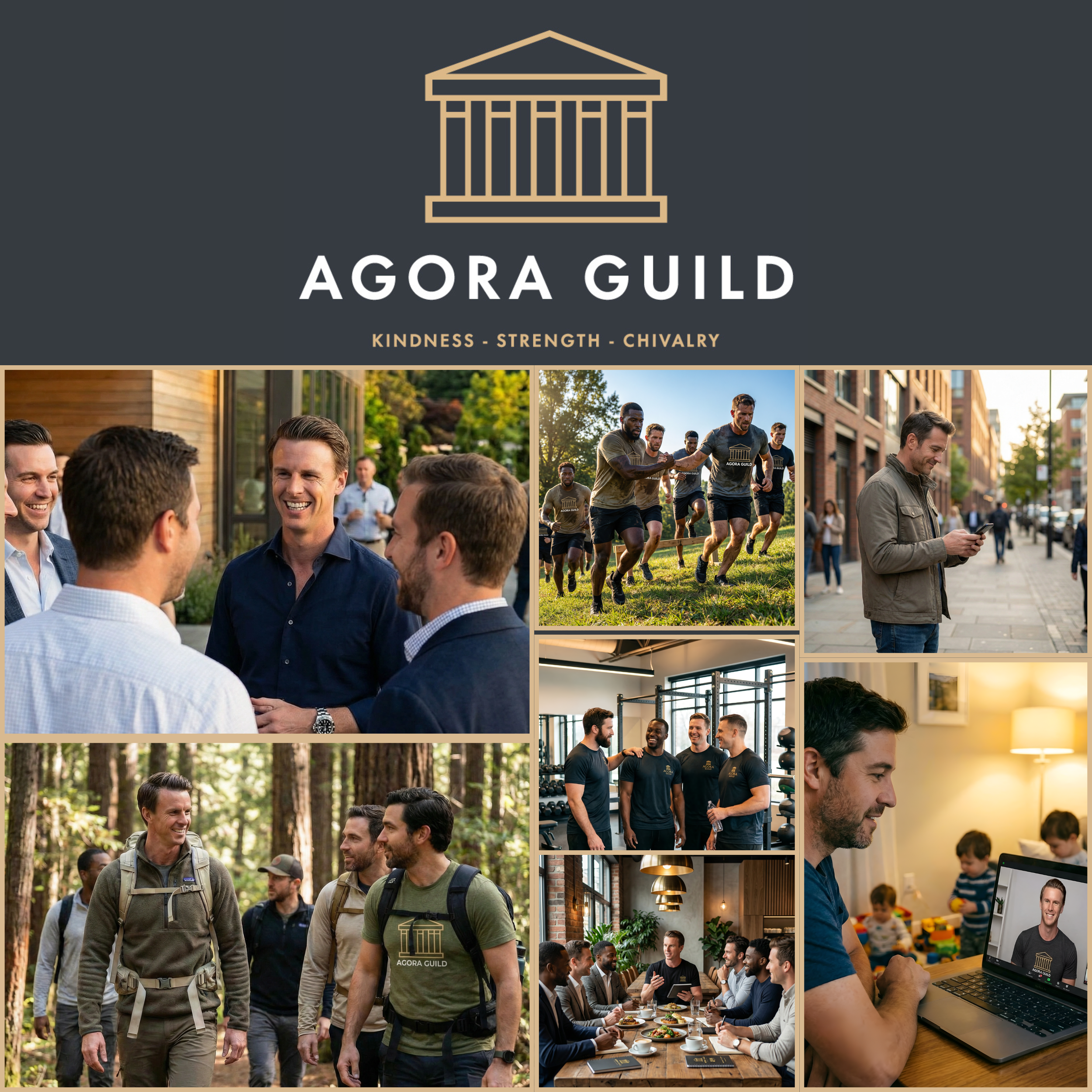
That is where Agora Guild enters the conversation. Agora Guild positions itself as a men’s community built on kindness, strength, and chivalry, with a holistic focus on health, wealth, family, personal growth, mindset, fitness, and deeper purpose. The brand promise is not passive inspiration. It is brotherhood, accountability, and practical momentum for men who want breakthroughs instead of another round of half-finished goals.
The Trap of Motivation: Why Feelings Fade and Systems Succeed

What is the real difference between relying on motivation versus practicing self-discipline?
Motivation is an emotional state. It rises when a goal feels exciting, urgent, or meaningful, and it falls when stress, boredom, uncertainty, or discomfort show up. Self-discipline is different. It is the practiced ability to follow through on what matters even when the moment does not feel inspiring. In behavior-change research, the real challenge is that your status quo behavior is usually more immediately rewarding than the behavior you know is better for you long term. That is exactly why motivation alone is unreliable. It depends on the mood of the moment, while discipline is built around pre-decided action.
Why does the motivation to hit a new goal almost always fade after a few weeks?
Because motivation shows up fast, but automaticity shows up slower. A 2024 systematic review found that new habits can begin forming in about two months, with reported averages varying widely and some people taking much longer. In plain English, your excitement often fades before the behavior becomes automatic. That gap is where most men quit. They mistake the normal drop in emotional intensity for proof that the goal is wrong or that they are not disciplined enough, when really they are just in the middle stretch where repetition matters most.
Why do experts say that self-discipline is a reliable system while motivation is just a temporary feeling?
Because high self-control is not mainly about heroic resistance all day long. Research suggests that beneficial habits are a major reason disciplined people get better outcomes. In other words, the disciplined man is not winning because he feels stronger every morning. He is winning because he has reduced the number of decisions he has to make and the number of inner battles he has to fight. He has standards, cues, routines, and defaults. Motivation is the spark. Discipline is the engine. When the spark is gone, the engine still runs.
That distinction matters because a man who keeps chasing motivation will keep living in cycles. He surges, slips, restarts, and wonders why he feels stuck. A man who builds discipline stops asking, “Do I feel like it?” and starts asking, “What is the next action my system requires?” That question changes everything.
Building the Self-Discipline Muscle: Systems and Daily Routines

How can I build my self-discipline muscle using daily habits and systems?
You build discipline the same way you build physical strength: through repeated reps, not dramatic speeches. Research on self-control training has found support for the idea that practicing small acts of self-control can strengthen overall self-control capacity. That means discipline is not some rare trait a few men are born with. It is trainable. The mistake is starting too big. Men often try to overhaul their whole life in one Monday morning burst. A better move is to lock in a few non-negotiable reps that are small enough to survive a bad day.
A strong system usually starts with three anchors: one fixed wake-up range, one daily movement standard, and one clear work target. Once those anchors are stable, you layer in nutrition, reading, prayer or reflection, deeper training, and better recovery. That is how you build the self-discipline muscle. Not by waiting to feel ready, but by giving yourself a structure that reduces debate. The fewer negotiations you have with yourself, the stronger your consistency becomes.
What is the progressive overload method for developing mental toughness and consistency?
Think of progressive overload mental toughness as the discipline version of strength training. You do not start by deadlifting 500 pounds. You start with a manageable load, recover, and add challenge over time. Mental toughness works the same way. Week one might be a 10-minute walk, five minutes of planning, and one hard task before checking your phone. Week two becomes 15 minutes, a stricter bedtime, and a slightly bigger work block. Week three adds a tougher conversation you have been avoiding. The point is not punishment. The point is adaptation.
This matters because consistency breaks when the plan demands more identity change than your current system can support. Small wins create evidence. Evidence builds confidence. Confidence makes the next rep easier to accept. Over time, the man who once needed motivation to act becomes the man who acts because that is simply who he is.
What are the best daily routines for men to maintain consistency on low-energy days?
On low-energy days, do not aim for peak performance. Aim for baseline integrity. A good low-friction routine for men looks like this:
Get up at your normal time, or close to it.
Drink water before caffeine.
Do 10 minutes of movement, even if it is just a brisk walk or mobility work.
Write the top one task that moves your life forward.
Spend 25 focused minutes on that task before distractions.
Send one accountability update to someone who will notice whether you followed through.
End the day by laying out tomorrow’s first move.
That kind of routine is powerful because it protects identity. You may not dominate the day, but you also do not disappear from your standards. Men lose discipline fastest when they let one low-energy day become a full retreat. Keep the floor high, and your ceiling will take care of itself.
Engineering Consistency: Environment and External Accountability

How can men create a structured environment that forces them to take action toward their goals?
Discipline gets much easier when your environment does some of the work for you. Behavior-change research points to the power of situational strategies and backward planning. The disciplined move is not just trying harder in the moment. It is shaping the moment before it arrives. Put the phone in another room. Lay out gym clothes the night before. Use website blockers during deep work. Keep junk food out of the house. Put the journal on the pillow. Pre-book the training session. A well-designed environment reduces decision fatigue and shrinks the gap between intention and action.
Create friction for bad habits and remove friction for good habits. Make the wrong move slightly harder and the right move slightly easier. That sounds basic because it is basic. It is also effective. The disciplined man is not always the man with the strongest feelings. He is often the man with the cleanest setup.
How does external accountability actually help you stay disciplined when you want to quit?
External accountability matters because humans follow through better when expectations are visible, specific, and shared. The supportive accountability model argues that human support improves adherence when there is trust, clarity, and regular follow-up. Social-support research also shows that community matters because it provides emotional support, guidance, feedback, belonging, and a buffer against stress and isolation. In real life, that means you are less likely to vanish from your commitments when someone credible is going to ask, “Did you do what you said you would do?”
That is the bridge from personal systems to brotherhood. Your room setup helps. Your calendar helps. Your habits help. But when you are tired, discouraged, or drifting, another man’s presence can keep you from rationalizing your way out of the standard.
The Brotherhood Advantage: Why Isolation Kills Momentum

Why is it so much harder to build self-discipline in isolation compared to joining a brotherhood?
Because isolation makes every lapse private and therefore easier to excuse. Social support is not just emotional comfort. It is belonging, respect, feedback, guidance, and the felt belief that help is available if needed. When a man tries to rebuild his life alone, every setback hits harder because there is no mirror, no witness, and no brother to call him back to what matters. In isolation, excuses sound intelligent. In brotherhood, they get exposed.
How do weekly calls and daily check-ins keep high-performing men on track?
Agora Guild’s structure is built around repetition, not random inspiration. Its membership page describes weekly strategic group sessions designed to challenge, motivate, and equip members, a private WhatsApp accountability group for daily check-ins and real conversations, and curated in-person experiences including events, retreats, workouts, dinners, and catalyst sessions. That kind of cadence matters because it keeps discipline from becoming a once-a-week idea. It turns growth into a lived rhythm.
The weekly calls help men zoom out, recalibrate goals, and get challenged by other men who are serious about becoming better. The daily WhatsApp layer handles the opposite problem: drift. That is where a lot of progress dies. Not in dramatic failure, but in quiet slippage. A quick daily check-in closes that gap. It keeps commitments visible. It keeps momentum warm. It reminds a man that he is not doing the work alone.
Is the monthly investment in Agora Guild worth it for the daily WhatsApp accountability features?
For the right man, yes, because the value is not the app itself. The value is the frequency of honest contact with your own standards. Agora Guild lists monthly membership at $150, and that membership includes weekly calls, accountability check-ins, in-person retreats, events and private community access. If you are the kind of man who has already consumed enough content but still struggles to stay consistent, daily accountability may be worth far more than another course you never finish.
The real ROI is behavioral. Miss fewer workouts. Delay less on important work. Stop disappearing when the week gets hard. Stay in the game longer. Add in the wider ecosystem around the brand, including Agora 100, live events, and mindset coaching, and the offer becomes less about motivation and more about building a life with structure around it.
Choosing the Right Men’s Group for Strategic Growth
Agora Guild vs EVRYMAN
EVRYMAN currently describes itself as an in-person experiences community for men built around field trips, workshops, and expeditions, and its FAQ explicitly says, “No apps, no courses, no Zoom calls.” That makes EVRYMAN appealing for men who want real-world connection, adventure, and friendship-building through shared experience. Agora Guild is a better fit for men who want a more execution-focused rhythm of weekly strategic calls, daily WhatsApp accountability, and structured follow-through between meetings.
Agora Guild vs MKP
The ManKind Project is a global nonprofit brotherhood that supports peer-facilitated men’s groups, personal development programs, mentorship, and service. That makes MKP a strong option for men drawn to peer process, rites-of-passage energy, and service-oriented growth. Agora Guild stands apart when the priority is practical accountability for health, work, family leadership, and daily consistency. MKP is powerful men’s work. Agora Guild is more directly positioned as strategic growth plus day-to-day execution.
WYSER Men’s Group vs Agora Guild
WYSER Men’s Group presents itself as an online community and support group for men with courses, activities, challenges, accountability and goal setting, expert facilitation, discussion groups, video meetings, and special events. It also frames its member journey around “Pain, Gain or Train,” which suggests a broader developmental and emotional-growth curriculum. WYSER is a solid WYSER Men’s Group alternative for men who want structured online courses and a deeper guided learning environment. Agora Guild is the sharper choice for men who want less curriculum and more strategic brotherhood, daily accountability, and consistent action around real-world goals.
What specific features should you look for in a men’s group to help you level up your life and career?

Look for five things:
A clear cadence: weekly calls or meetings are better than vague “community access.”
Daily accountability: some kind of check-in layer matters if consistency is your problem.
Shared values: you want men who care about integrity, family, growth, and standards.
Action, not just talk: insight is good, but a good men’s accountability group should move you toward behavior change.
Real relationships: in-person events, honest friendships, or strong ongoing connection keep the group from becoming another content subscription.
How can men find and join the right brotherhood to finally stop relying on motivation and start taking disciplined action?

Start by being honest about what you actually need. If you need adventure and in-person bonding first, EVRYMAN may fit. If you want peer-facilitated men’s work and service, MKP may fit. If you want courses, guided development, and online support, WYSER may fit. But if your main problem is this: “I know what I should do, but I do not stay consistent long enough to become the man I say I want to be,” then Agora Guild is built for that problem.
Stop relying on fleeting motivation. Join Agora Guild for $150 per month and put yourself inside a structure that includes weekly strategic calls, daily WhatsApp accountability, and brotherhood built around becoming more together. The men who change are rarely the men who feel the most inspired. They are the men who build a system, step into accountability, and keep showing up when the mood is gone.
